

Image source: shutterstock.com
While inflation has made grocery prices feel sticky, certain items are trapped in a perpetual cycle of discounting. Manufacturers use these specific products as loss leaders—items sold at little to no profit to get you into the store. These 10 foods are on sale so frequently that you should essentially never pay full price for them. If you see them at full sticker price, just wait; the sales cycle for these items is typically every 3 to 4 weeks.
1. Breakfast Cereal
Cereal has one of the highest markups in the store, which allows for deep discounting. The major players, General Mills and Kellogg’s, operate on a rotating schedule. 1 week General Mills is on sale; the next week it is Kellogg’s. By simply switching brands based on the week, you can always pay the sale price of $2 or $3 instead of the $6 regular price.
2. Soda and Carbonated Drinks
Soda prices are highly elastic and revolve around holidays and sporting events. However, even in off months, grocery stores rotate the sales of Coke, Pepsi, and 7-Up products. It is rare for a week to pass without a Buy 2, Get 1 or 3 for $12 deal on 12-packs. The shelf life is long, so buy enough during a sale to last you through the full-price weeks.
3. Ground Beef
Fresh meat is perishable, which forces regular markdowns. Ground beef, being a high-volume staple, is featured on the front page of grocery flyers almost monthly to drive traffic. When you see family packs marked down to $3 or $4 a pound, it is time to buy 10 pounds and freeze it.
4. Bacon
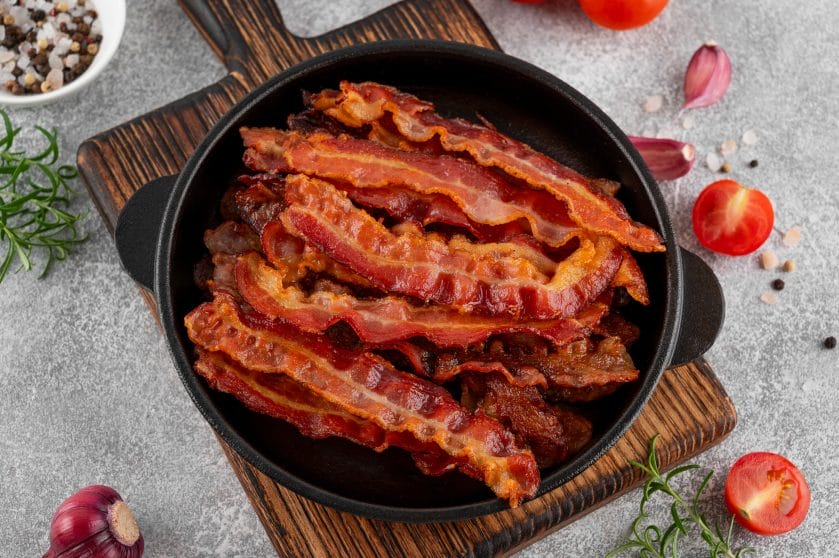
Image source: shutterstock.com
Bacon is a trigger item for shoppers. Retailers know that cheap bacon brings people in. You will frequently see deep discounts or digital coupons bringing premium bacon down to $5 a package. These sales rotate between brands constantly.
5. Ice Cream
Especially in the spring and summer, ice cream is a primary loss leader. Brands like Ben & Jerry’s and Häagen-Dazs are on a near-constant rotation of Buy One, Get One Free deals. In the winter, the sales frequency drops slightly, but the discounts are often deeper to clear inventory.
6. Potato Chips
The snack aisle is a battlefield. Frito-Lay and competitors fight for shelf space with weekly promotions. You should never pay $6 for a bag of Doritos. If you wait 2 weeks, that same bag will be part of a Must Buy 3 sale that drops the price to $3 each.
7. Pasta and Jarred Sauce
Dry pasta and jarred marinara are pantry staples that see monthly sales cycles. It is common to see pasta drop to $1 a box once a month. Since it lasts for 2 years, stock up during the sale week.
8. Yogurt
Single-serve yogurt cups are designed for volume sales. Retailers frequently run 10 for $10 or Buy 5, Save $5 promotions on brands like Chobani or Yoplait. These sales happen so often that paying the single-cup price is unnecessary.
9. Frozen Pizza
Frozen pizza is the ultimate convenience food, and the freezer aisle always has at least 1 brand on deep discount. Whether it is DiGiorno or Red Baron, the sales rotation ensures you can always find a pizza for $5 or $6 rather than the $10 full price.
10. Shredded Cheese
Cheese has a long shelf life but is heavily promoted. 8-ounce bags of shredded cheese rotate through sales cycles constantly. If you buy 3 bags when they are $2 each, you will likely run out right as the next sale cycle begins.
The Never Full Price Rule
For these 10 items, the regular price is essentially a tax on impatience. By simply observing the weekly flyer, you will realize that the sale price is the real price, and the full price is just a penalty for poor timing.
What to Read Next
6 Items That Drop in Price Once Holiday Demand Ends
12 Food Categories That Retailers Flag for Coupon Cuts in Next Quarter
New Year Price Predictions That Matter to Every Coupon User
Seasonal Meat Prices That Shift Based on Weather and Demand
10 Retailer Price Drops That Trigger Major Coupon Opportunities