
Image source: shutterstock.com
Coupon fatigue is real. For every “extreme couponer” with a binder full of inserts, there are ten shoppers who simply do not have the time or energy to clip, sort, and scan. The good news is that you do not need to be a coupon power-user to save significant money. Grocery stores offer a layer of “passive” savings—deals that trigger automatically or exist permanently on the shelf—that require zero effort on your part. By focusing on these six frictionless deal types, you can slash your bill without ever touching a pair of scissors or opening an app.
1. The “Loss Leader” Front Page
Every weekly circular has a front page. The items listed here are “loss leaders,” products sold at or below cost, specifically to get you into the store. You do not need a coupon to get these prices; you just need to put them in your cart. Whether it is eggs, ground beef, or seasonal fruit, the front-page price is almost always the lowest in town. If you simply buy whatever is on the front page of the flyer near the door, you are automatically saving 30% to 50% compared to the interior aisles.
2. Instant “Buy 5, Save $5” Sales
These “Mega Event” sales are programmed directly into the register. As long as you count correctly and put the required number of participating items in your cart (usually 5 or 10), the $5 discount comes off automatically at the end. There is no barcode to scan or digital offer to load. The shelf tags clearly mark which items are included. It is a volume discount that rewards you simply for buying a few extra pantry staples.
3. The “Must Go” Clearance Meat
Look for the neon stickers on packages of meat. These are manager markdowns for items nearing their sell-by date. The discount—often 30% to 50%—is applied via a new barcode sticker on the package. You don’t need to ask for it; the cashier just scans it. If you have a freezer, this is the single easiest way to save on protein. You buy the steak today, freeze it, and eat it next week for half price.
4. Bulk Bin Unit Pricing
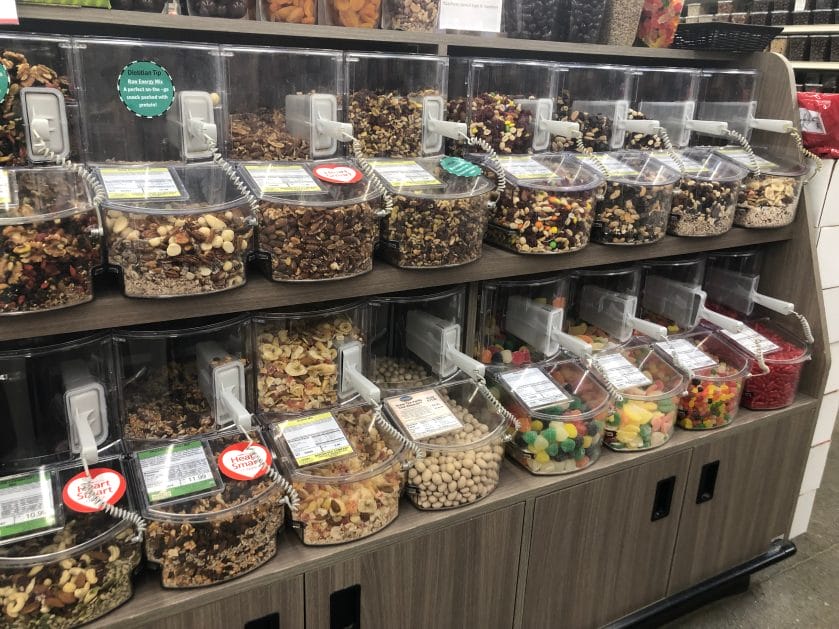
Image source: shutterstock.com
The bulk section is a permanent sale. Spices, rice, beans, and nuts sold from the gravity bins are often 40% cheaper than their packaged counterparts because you aren’t paying for the glass jar or the brand marketing. There is no coupon needed; the savings are built into the business model. You just scoop, weigh, and pay less.
5. Rain Checks
If a sale item is out of stock, go to the customer service desk and ask for a rain check. This is a slip of paper that allows you to buy the item at the sale price later, even after the sale ends. It is a passive way to extend a deal. You are essentially securing a future discount without doing any work other than asking.
6. Store Brand “Compare and Save”
The private label (store brand) is the ultimate coupon-free deal. These products are permanently priced 20% lower than the national brand. You do not need to wait for a sale or clip a coupon to save on sugar, flour, or canned veggies. You just reach for the box to the right of the name brand. The quality is often identical, and the savings are instant and perpetual.
The Lazy Saver’s Victory
You do not have to treat grocery shopping like a second job to save money. By leveraging store brands, automatic register deductions, and clearance stickers, you can keep your budget intact while keeping your weekends free of coupon clipping.
What to Read Next
Are Subscription Grocery Deals Worth the Cost in 2026?
6 Store Policies That Can Help You Score More Grocery Deals
No Coupons, No Problem: 8 Clever Ways to Save Money on Groceries Today
How to Find the Best “Free with Purchase” Grocery Deals This Month
7 Rare Grocery Coupon Codes You Should Know Before Check-Out