
Image source: shutterstock.com
Target is known for its “Tar-zhay” aesthetic, enticing shoppers to spend more on trendy home goods and apparel. However, beneath the polished presentation lies a rigorous, predictable clearance system that savvy shoppers can exploit. Target’s markdown schedule is not random; it follows a specific logic governed by shelf space and inventory turnover. By learning to read the tags and timing your visits, you can locate items marked down by 70% or even 90% that the average shopper walks right past.
1. The “End Cap” Ecosystem
Clearance items at Target rarely stay in their original aisle. They are migrated to the “end caps”—the shelves at the end of the aisles facing the back or perimeter walls of the store. Employees consolidate clearance here to clear the main shelves for new stock. Always scan the end caps of the toy, home, and beauty sections first. The “good stuff” is hidden on the side facing away from the main walkway to avoid cluttering the store’s visual flow.
2. Reading the Tiny Number
The red clearance sticker tells a story. In the upper right-hand corner of the tag, you will see a tiny number, usually 30, 50, or 70. This represents the percentage off the original price. If you see a “30,” it means the item has just started its clearance lifecycle. Wait two weeks, and it will likely drop to “50,” and eventually “70.” If you see a “70,” buy it immediately; that is typically the floor before the item is “salvaged” (donated or sold to a liquidator).
3. The Markdown Schedule
While it varies by region, most Target stores follow a general weekly markdown rhythm to manage employee workload.
Monday: Electronics, Accessories, Kids’ Clothing.
Tuesday: Women’s Clothing, Pets, Market (Food).
Wednesday: Men’s Clothing, Health & Beauty, Diapers.
Thursday: Housewares, Lingerie, Shoes, Toys.
Friday: Cosmetics, Jewelry, Auto. Shopping on the specific morning your target category is marked down ensures you get the first pick of the new 50% or 70% off items.
4. The Holiday “90% Off” Window
Seasonal items follow an aggressive degradation path. The day after a holiday (Christmas, Valentine’s, Easter), items drop to 50%. Three or four days later, they hit 70%. Roughly a week to ten days after the holiday, the remaining stock hits 90% off. This is the prime time to buy non-perishable items like wrapping paper, paper plates, or generic décor you can store for next year.
5. The Price Scanner Check
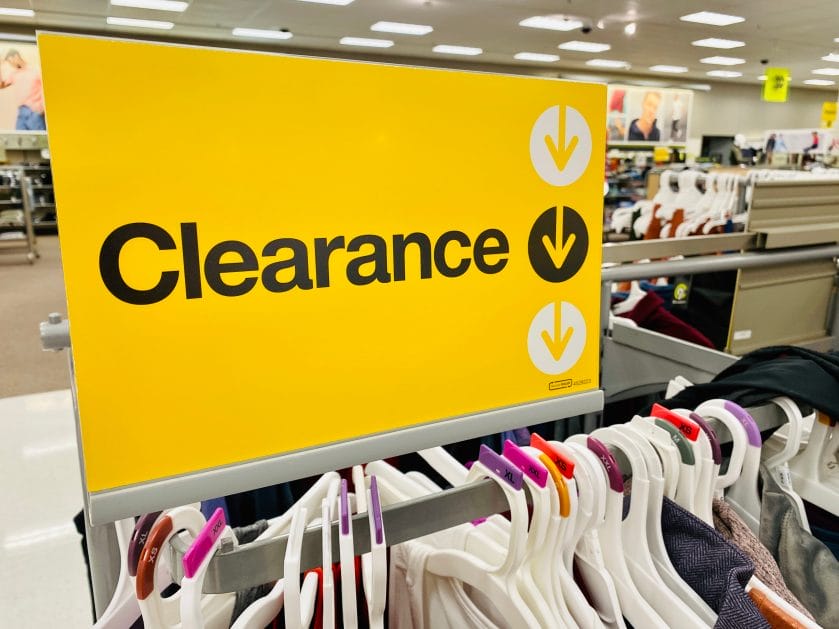
Image source: shutterstock.com
Employees are human and sometimes miss updating a tag. If you see a clearance item that looks like it has been sitting for a while but still has a “30” sticker, scan it at a price checker or use the Target app. Often, the system price has dropped to 50% or 70%, but the physical sticker hasn’t been replaced yet. The scanner reveals the truth.
6. The “Repackage” Sticker
In the electronics and home goods sections, look for small white stickers that say “Repackage” or “AS IS.” These are online returns that are in perfect condition but cannot be sold as new. The discounts on these items can be substantial, and you can often inspect the contents before purchasing to ensure nothing is missing.
7. The Toy Aisle Reset
Target performs massive toy aisle resets in January and July. During these months, thousands of toys are cleared out to make room for the new season’s inventory. This is the “Black Friday” of clearance shopping. You will find LEGO sets, action figures, and dolls at 70% off. Stocking a “gift closet” during these two months can save you hundreds of dollars on birthday presents throughout the year.
8. Don’t Trust the “Clearance” Sign Placement
Sometimes, non-clearance items are accidentally (or strategically) placed on clearance shelves. Always check the ticket. Conversely, shoppers abandon clearance items in random aisles. If you spot a toy in the cereal aisle, check the price; it might be a 70% off gem that someone decided against at the last minute.
Systematizing the Search
Target clearance shopping is a game of probability. By checking the end caps, reading the percentage codes, and aligning your visits with the markdown calendar, you shift the odds in your favor. You stop paying for the “Tar-zhay” experience and start paying for the product itself.
What to Read Next
10 Do’s and Don’ts of Target’s Curbside Pickup
15 Target Must-Haves That Are So Worth the Hype
Essential Grocery Price Comparison: Walmart, Target, Whole Foods